Showing posts with label employers. Show all posts

Saturday, August 13, 2011

Thousands of Mexican Professionals emigrating to USA

With salaries ten times larger for some professionals in the US, violence and insecurity at home, thousands have been leaving home in another version of the "Brain-Drain" phenom.  The majority head north.  This trend contradicts the recent drop-off in Mexican immigration statistics.

By
Alberto Nájar
BBC Mundo

La emigración de México a Estados Unidos ha disminuido, según datos oficiales de ambos países. Pero existe un grupo de mexicanos que parece caminar en sentido contrario a la tendencia.
Cada año miles de profesionales abandonan el país en busca de mejores oportunidades o para huir de la inseguridad, reconocen especialistas y autoridades.
Estados Unidos es el destino de la mayoría. La Secretaría de Educación Pública informó que en la última década se duplicó el número de mexicanos con licenciatura y posgrado que emigraron al país.
En 2000 había 411.000 de estos profesionales, y para 2010 el número aumentó a más de un millón. Uno de cada cinco mexicanos con doctorado vive en Estados Unidos.
El fenómeno alarma a las autoridades, que han implementado varios programas para retener y repatriar a los migrantes altamente capacitados, pero hasta ahora el proceso migratorio no se ha detenido, le dice a BBC Mundo Camila Tigau, especialista del Centro de Investigaciones Sobre América del Norte (CISAN).
"Hubo la perspectiva optimista de que con la crisis de 2008, como iba a haber menos empleo en Estados Unidos y Canadá se resolvería el problema de la fuga de cerebros en México, pero eso no ha pasado", explica.
"Ha habido factores más importantes que llevan a la gente fuera, entonces en vez de que tengamos un retorno importante lo que hay es una salida importante de gente".

Sueldos

Dólares.
Un recién graduado puede ganar casi diez veces más en Estados Unidos que en México.
La diferencia salarial parece ser uno de los principales estímulos para la migración de profesionales.
De acuerdo con la Oficina de Estadísticas Laborales de Estados Unidos un ingeniero civil recién graduado obtiene un ingreso mensual de US$4.500.
En México, en cambio, el sueldo de un profesional de este nivel es de unos US$590 cada mes, según la Secretaría del Trabajo.
Tal vez por eso aumentó la migración de ingenieros, sobre todo de los especializados en mecánica.
Recientemente la Asociación Mexicana de la Industria Automotriz dijo que la demanda de estos profesionales en el mercado estadounidense está al alza, pues muchos ingenieros de ese país se jubilarán en los próximos años.
Así, la semana pasada la Asociación de Ingenieros Universitarios Mecánicos Electricistas (AIUME), dijo que unos 40.000 ingenieros mexicanos emigran cada año a Estados Unidos en busca de mejores empleos.

http://www.bbc.co.uk/mundo/noticias/2011/08/110810_migracion_profesionistas_mexico_an.shtml

Tuesday, August 9, 2011

Million skilled immigrants await 120k visas -- Results: Brain Drain

More than one million skilled immigrant workers, including scientists, engineers, doctors and researchers and their families, are competing for 120,000 permanent U.S. resident visas each year, creating a sizeable imbalance likely to fuel a "reverse brain-drain" with skilled workers returning to their home country, according to a new report released today by the Ewing Marion Kauffman Foundation.
The situation is even bleaker as the number of employment visas issued to immigrants from any single country is less than 10,000 per year with a wait time of several years.
"The United States benefits from having foreign-born innovators create their ideas in this country," said Vivek Wadhwa, Wertheim fellow with the Harvard Law School and executive in residence at Duke University. "Their departures would be detrimental to U.S. economic well-being. And, when foreigners come to the United States, collaborate with Americans in developing and patenting new ideas, and employ those ideas in business in ways they could not readily do in their home countries, the world benefits."
Conducted by researchers at Duke University, New York University and Harvard University, the study is the third in a series of studies focusing on immigrants’ contributions to the competitiveness of the U.S. economy. Earlier research revealed a dramatic increase in the contributions of foreign nationals to U.S. intellectual property over an eight-year period.
In this study, "Intellectual Property, the Immigration Backlog, and a Reverse Brain-Drain," researchers offer a more refined measure of this rise in contributions of foreign nationals to U.S. intellectual property and seek to explain this increase with an analysis of the immigrant-visa backlog for skilled workers. The key finding from this research is that the number of skilled workers waiting for visas is significantly larger than the number that can be admitted to the United States. This imbalance creates the potential for a sizeable reverse brain-drain from the United States to the skilled workers’ home countries.
The earlier studies, "America’s New Immigrant Entrepreneurs" and "Entrepreneurship, Education and Immigration: America’s New Immigrant Entrepreneurs, Part II," documented that one in four engineering and technology companies founded between 1995 and 2005 had an immigrant founder. Researchers found that these companies employed 450,000 workers and generated $52 billion in revenue in 2006. Indian immigrants founded more companies than the next four groups (from the United Kingdom, China, Taiwan and Japan) combined.
Furthermore, these companies’ founders tended to be highly educated in science, technology, math and engineering-related disciplines, with 96 percent holding bachelor’s degrees and 75 percent holding master’s or PhD degrees.
Among key findings in the most recent report:
  • Foreign nationals residing in the United States were named as inventors or co-inventors in 25.6 percent of international patent applications filed from the United States in 2006. This represents an increase from 7.6 percent in 1998.
  • Foreign nationals contributed to more than half of the international patents filed by a number of large, multi-national companies, including Qualcomm (72 percent), Merck & Co. (65 percent), General Electric (64 percent), Siemens (63 percent) and Cisco (60 percent). Forty-one percent of the patents filed by the U.S. government had foreign nationals as inventors or co-inventors.
  • In 2006, 16.8 percent of international patent applications from the United States had an inventor or co-inventor with a Chinese-heritage name, representing an increase from 11.2 percent in 1998. The contribution of inventors with Indian-heritage names increased to 13.7 percent from 9.5 percent in the same period.
  • The total number of employment-based principals in the employment-based categories and their family members waiting for legal permanent residence in the United States in 2006 was estimated at 1,055,084. Additionally, there are an estimated 126,421 residents abroad also waiting for employment-based U.S. legal permanent residence, adding up to a worldwide total of 1,181,505.
Using data from the New Immigrant Survey, the authors find that, in 2003, approximately one in five new legal immigrants in the United States and about one in three employment-based new legal immigrants either planned to leave the United States or were uncertain about remaining. The authors had no data on how many foreign nationals have actually returned to their homelands.
"Given that the U.S. comparative advantage in the global economy is in creating knowledge and applying it to business, it behooves the country to consider how we might adjust policies to reduce the immigration backlog, encourage innovative foreign minds to remain in the country, and entice new innovators to come," said Robert Litan, vice president of Research and Policy at the Kauffman Foundation.
Read more:  http://www.kauffman.org/Details.aspx?id=1020

Friday, July 15, 2011

25% of Start-up Firms: Immigrants at work

Foreigners in the US are responsible for nearly 25 percent of start-up American firms, findings of a latest research by Harvard, NYU and Duke, UC-Berkeley reveal.

No wonder, several policy makers are being asked for increasing the quota for highly skilled worker visas in the US.

As per the study, out of the total start-up companies established between the year 1995 and 2005 in Silicon Valley, nearly 52 percent were by foreigners.
And the number of patents filed by immigrants in the US for the same period is said to be 25.6 percent which is up by 337 percent since the year 1998.

Its not just in the US that the immigrant investors have been found to be making significant contribution towards start-up firms, in fact, foreigners seem to be leading in investments in several other nations too including Canada.
According to reports, a Vancouver entrepreneur group has been asking the federal government for starting ‘startup visas’ for foreign investors wanting to come and invest in Canada.
In a similar move, the US government is being asked for creation of a US startup visa and the bill is being sponsored by US Senators Richard Lugar, Republican of Indians and John Kerry, Democrat of Massachusetts.

The bill will provide any foreign entrepreneur a temporary US work visa if he obtains a minimum amount of $100,000 for investment for gaining US permanent residency.
In addition, the immigrant entrepreneur will also be responsible for creating at least five new jobs in the US in the period of two years, generate venture capital exceeding $1 million or $1 million sales each year.
Such changes in the federal policy of the US which favor potential foreign entrepreneurs would lead to growth and innovation in the US, agree several experts including a law professor at Yale University, Peter Schuck, and corporate secretary and vice president of the Ewing Marion Kauffman Foundation, John Tyler.

Several nations like Australia, Germany, the UK and some other European nations already have changed their immigration process in order to allow foreign immigrant investors and high-skilled immigrants into their nations.

Friday, June 17, 2011

The Politics of Immigration

The Republican Party is increasingly becoming an exclusionary party of white anglos.  As the demographics of our population changes, Republicans are choosing to sideline themselves.

Thursday, June 16, 2011

Send them HOME !

They are stealing our jobs.  They aren't paying any taxes.  They are a drain on our society.  They are having babies so they can claim social services and stay in our country.  They don't speak our language.  Send them HOME !


Send us your huddled masses.

 Irish immigrants a century ago.

Monday, June 13, 2011

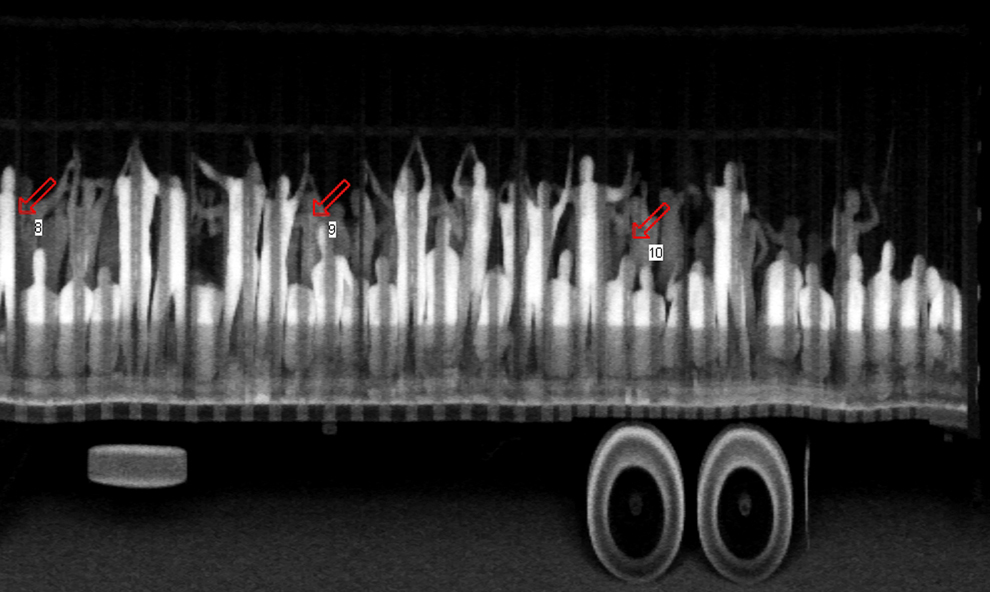
Come join the party! Leaving southern Mexico in the morning.

Come join the party!  We're getting together for a couple of drinks - 2 beers for 500 of us for the next 6 weeks.  We are leaving Chiapas (southern Mexico) in the morning for the United States.  There is a cover charge of        $ 10,000 US.  but I'm sure you wont have any trouble coming up with this, since you are making enough pesos working in the field under the hot sun.  You surely must have enough to cover this little expense.

We're almost full so hurry!


See other pictures of immigration around the world.  You will begin to see the Big Picture:  http://www.boston.com/bigpicture/2011/06/immigration.html

Click to add your COMMENTS.

Sunday, June 12, 2011

Immigration Fraud: businesses taking advantage of immigrants

According to Alicia Acuña of Fox News/Latino, the U.S. Department of Justice, along with the Department of Homeland Security and the Federal Trade Commission announced this week a major crackdown on businesses that take advantage of immigrants to the United States.  Specifically, individuals who run sham operations claiming to be immigrant consultants or attorneys, who provide expertise and services to those applying for residency, work visas and citizenship.

"We have been working together to take a stand," said Tony West, Assistant Attorney General at a press conference, "against those who prey upon immigrant communities by making promises they do not keep and charging for services they are not qualified to provide."


Read more: http://latino.foxnews.com/latino/politics/2011/06/10/nationwide-crackdown-on-immigration-notarios/#ixzz1P8BfemP3

Add a COMMENT

Wednesday, June 8, 2011

Maria Gonzales: illegal alien. What will you do with her?

Raul’s family has lived in Texas for 4 generations.  He is a US Citizen.  Six years ago he married Maria, whose parents brought her to the US illegally when she was a teenager.  Raul and Maria now have two boys and are expecting another in three months.  Raul works hard and pays all this taxes and mortgage on their home.  Maria confides in you that she is an illegal alien and that her boss is paying her under the table so she can save on her payroll expenses.


You have a choice.  What will you do?
1.       Report Maria and her boss to the authorities, so Maria will be deported.
2.       Keep quiet, do nothing and allow Maria to continue supporting her family even though she arrived here illegally and her boss illegally hired her.
3.       Try to find a way for Maria to become legalized and for her boss to pay all her taxes.

Comprehensive Immigration Reform - the smart choice

With a comprehensive approach to immigration reform we can improve life in the USA for
  1. All workers
  2. Honest employers
  3. Tax payers.


Most illegal aliens are paying taxes:
  • property taxes, either directly if they own a home, or through rent;
  • sales tax on everything they buy;
  • Social Security tax collected by their employers, which they will never get back if it is on a false ID
  • Medicare tax - same as Soc Sec
  • State income tax - same as above
If it is illegal to enter this country or overstay without proper documentation, it is equally illegal to hire an undocumented person.  Therefore, if we want to send illegals back home, we must also deport employers who hire them.
How well do you think that would work?   What politician would suggest this solution?

Saturday, June 4, 2011

Farmers: E-Verify a disaster for Americans


The agriculture industry fears a disaster on the horizon if the bit of new immigration policy that Congress seems to agree on becomes law.
A plan to require all American businesses to check their employees through E-Verify, a program that confirms that each is legally entitled to work in the U.S., could wreak havoc on an industry where 80 percent of the field workers are illegal immigrants.
"We are headed toward a train wreck," said Rep. Zoe Lofgren, a California Democrat whose district includes agriculture-rich areas.
Lofgren said that farmers want to hire legal workers and U.S. citizens but that it's nearly impossible given the relatively low wages and back-breaking work.
Wages can range from minimum wage to more than $20 an hour. But workers are often paid by the piece; the faster they work, they more they make. A steady income lasts only as long as the planting and harvesting seasons.
"Few citizens express interest, in large part because this is hard, tough work," Agriculture Secretary Tom Vilsak said last week. "Our broken immigration system offers little hope for producers to do the right thing."
Last year the United Farm Workers launched a Take Our Jobs campaign to entice Americans into the fields. But President Arturo Rodriguez said that of about 86,000 inquiries, only 11 workers took jobs.
"That really was thought up by farmworkers trying to figure out what is it we needed to do to show that we are not trying to take away anyone's job," Rodriguez said.
Manuel Cunha, president of Nisei Farmers League, a group representing growers in Central California, said farmers don't have the wherewithal to verify workers' status.
"If we were to use E-Verify now, we'd shut down -- either that or farmers would go to prison," said Cunha, a Fresno-based citrus farmer.
Shawn Coburn, a politically active farmer who grows thousands of acres of almonds in west Fresno County, said he favors tighter borders, a guest worker program and a path to citizenship for those already in the U.S., or at the very least their children. But, like Cunha, he believes that a mandatory E-Verify plan would be nothing but trouble for the industry.
"I don't think it's going to happen, but if it does it would throw the California economy for a loop," Coburn said.
Without a broad policy overhaul in the works, industry officials have focused on improving the H-2A temporary agricultural workers visa program, which is aimed at allowing seasonal workers to work on U.S. farms.
The program, is costly, time-consuming and inefficient, however, according to Cathleen Enright, vice president of federal government affairs for the Western Growers Association.
Lee Wicker, deputy director of the North Carolina Growers Association said the H-2A program "is too expensive, it's too litigious, it's too bureaucratic.
Rep. Trey Gowdy, R-S.C., said farmers in his area want to do the right thing and hire legal workers but are frustrated with the stifling bureaucracy that comes with the visa program.
"It's a labyrinthine visa process, with the slow walking of applications," Gowdy said.
"You could not by accident come up with a better plan to ruin the small family farm."
Farmers, he said, "are just at their wits' end."

Thursday, June 2, 2011

H-2A Temporary Agricultural Workers

Could you meet the requirements of this program, if you wanted to hire some help?

Perhaps if you ran a company the size of Google or Microsoft, you could afford the research and paperwork necessary to prove these requirements.  But get real, folks.  99% of businesses can't afford the costs of meeting the hurdles of this H-2A program.  Here is what  the Dept of Homeland Security's site:  U. S. Citizenship and Immigration Services has to say about hiring temporary farm workers, if you want to do it legally:


The H-2A program allows U.S. employers to bring foreign nationals to the United States to fill temporary agricultural jobs for which U.S. workers are not available. 


To qualify for H-2A non immigrant classification:
  • The job offered must be of a temporary or seasonal nature
  • The employer must demonstrate that there are not sufficient U.S. workers who are able, willing, qualified, and available to do the temporary work
  • The employer must show that the employment of H-2A workers will not adversely affect the wages and working conditions of similarly employed U.S. workers

Wednesday, June 1, 2011

Agriculture Worker Visa Program for migrant workers

How easy is it to find agricultural workers who are legally in the US?  According to D.A. King of the Gwinnett Daily Post  it sounds fairly easy and profitable.  "An ag employer (farmer) can bring to the U.S. as many legal workers as he wants under the H2A Agriculture Worker Visa program."  

We'd love to hear from some farmers who have tried this program.  What were the obstacles?  Did it cost you more?  Was it worth the price?  Did you, or could you pass on these costs to your customers?  How many workers did you bring in under this program?  What does it mean to "bring in" ?  Did you have to go to Mexico (or elsewhere) to find workers, or just sign up with the government as a "host" for foreign workers?  Did you pay for them to come?  Would you use this method again to find workers?  How hard is it for you to find U.S. citizens to work for you?  What are your crops?
=========================================

Article By
   D. A. King

There is currently much consternation and hand wringing over the fact that the Georgia legislature may actually move to protect jobs by clamping down on illegal hiring with the no-cost federal E-Verify system. But a key component of the story is not widely known.
The argument du jour from the usual suspects opposed to enforcement is that Georgia would somehow lose its agriculture industry if we comply with the federal law making employment of illegal aliens well, you know — illegal.
While the media have faithfully reported on the agriculture angle, the existence of the legal alternative to continuing to hire black market farm laborers who have escaped capture at our borders has so far eluded mention.
It is something called the H2A agricultural worker visa.
This agricultural program establishes lawful means for agricultural employers who anticipate a shortage of domestic workers to bring an unlimited number — no ceiling! — of temporary foreign workers into the United States.
But the grateful, legal, temporary workers looking for a better life must be treated with dignity and respect. Employers must provide free housing that meets lawful safety and health standards and provide workers’ compensation insurance to workers at no cost to the worker.
The wage for H2A workers must be the same as that for U.S. workers. The rate must also be at least as high as the applicable prevailing wage rate the wage.
The employer must provide either three meals a day to each worker or furnish free and convenient cooking and kitchen facilities for workers to prepare their own meals. If meals are provided, then the employer may charge each worker a certain amount per day for the three meals.
These requirements obviously make hiring the more “flexible” and desperate illegal labor considerably more profitable. And there is little fear of federal punishment.
An H2A visa is usually issued for a period of one year and can be extended by two one-year extensions for a maximum of three years. Then the temporary workers must return to their home country — making them poor prospects for creating a resentful “oppressed” and “victimized” political constituency willing to march in American streets demanding legalization.
The concept that illegal workers are integral in or necessary for Georgia’s largest industry is complete fertilizer.
Readers may want to pass the H2A facts on to their state lawmakers and remind them that illegal immigration is a direct result of illegal employment.
And that with E-Verify — and courageous vigilance — we have the tools to stop illegal hiring.
D.A. King is a nationally recognized authority on illegal immigration and president of the Georgia-based Dustin Inman Society, which advocates for enforcement of immigration and employment laws. He has been an authorized E-Verify user since 2005


Read more from the Source: http://www.gwinnettdailypost.com/opinion/headlines/KING_E-Verify_not_a_risk_to_our_agriculture_114331934.html?storySection=story

Tuesday, May 31, 2011

E-Verify: a dagger in the heart of Agriculture

By Mahwish Khan
[Last weeks] Supreme Court ruling to uphold Arizona’s law requiring state businesses use the E-Verify system strikes a crushing blow to the Arizona agriculture industry.  If other states follow Arizona’s lead, or if Rep. Lamar Smith (R-TX) gets his wish and rams through a mandatory E-Verify law this summer, it will be the beginning of the end for American farms, domestic food sources, and related jobs held by Americans in production, processing, transportation, and marketing. In the absence of Comprehensive Immigration Reform at the federal level, mandatory E-Verify will deport farms and jobs. This will hurt all Americans.


According to Lynn Tramonte, Deputy Director of America’s Voice Education Fund:
Yesterday’s Supreme Court ruling is a dagger in the heart of Arizona agriculture.  If this type of law spreads nationwide, we will essentially deport the entire agriculture industry—including jobs held by Americans—and be forced to import more of our nation’s food supply.  Passing a mandatory E-Verify law without comprehensive immigration reform will kill American jobs and farms, burden small businesses, reduce tax revenue, and drive undocumented workers further underground. 


80 Yrs in Jail: Employers of Illegals

The crackdown against illegal immigration is moving in a different direction.  Local, state and federal authorities are changing the emphasis, increasingly going after employers while relaxing a bit the large scale factory-type of raids rounding up undocumented workers.

Photo:  mouthnews.com


According to the Seattle Times, " immigration authorities have greatly expanded the number of businesses facing scrutiny and cases where employers face severe sanctions.
In a break with Bush-era policies, the number of criminal cases against illegal-immigrant workers has dropped sharply in two years."


"Among those who have felt the impact of the tactics are two owners of Mexican restaurants in the Chuy's Mesquite Broiler chain, popular for their laid-back Margaritaville mood and broiled mahi tacos. On April 20, immigration agents descended on 14 Chuy's restaurants in Arizona and California, detaining kitchen workers and carrying away payroll books and other evidence.
The only criminal defendants were the owners, Mark Evenson and his son Christopher, and an accountant, Diane Ingrid Strehlow. If convicted on all charges of tax fraud and harboring illegal workers, the Evensons each face more than 80 years in jail."

Read more of this and other articles in the Seattle Times
http://seattletimes.nwsource.com/html/nationworld/2015184911_immig30.html